 Van Gogh Museum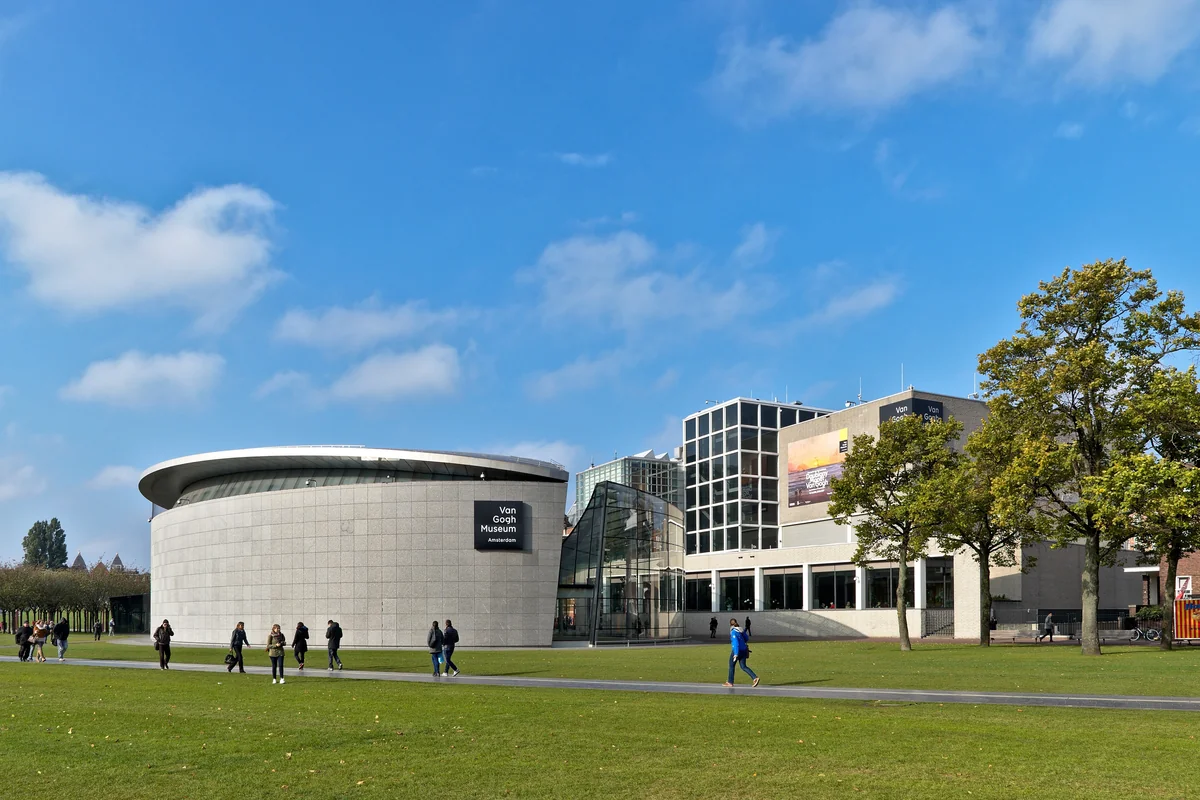
Van Gogh Museum Amsterdam Tickets & Visitor Guide 2026
Secure your entry to the Van Gogh Museum. Book online and skip the line.
- Guaranteed Timed Entry
- Instant Mobile Ticket
- Free Cancellation (24h)
- All Permanent Collections
Select Your Tickets
Choose your preferred date and time slot. All tickets include skip-the-line access.
Your Complete 2026 Guide to the Van Gogh Museum Amsterdam
Overlooking the sprawling lawns of Amsterdam’s historic Museumplein, the Van Gogh Museum stands as the world’s definitive sanctuary for the art and life of Vincent van Gogh (1853–1890). Housing the largest collection of his work on the planet — over 200 paintings, 500 drawings, and more than 750 intimate personal letters — the museum guides visitors through an unforgettable emotional and artistic journey.
Attracting more than 2 million international visitors each year, the museum is a cornerstone of European culture. Because of its immense popularity and strict gallery capacity regulations, securing your tickets online well in advance is paramount.
Why Advance Online Booking Is Mandatory
You cannot purchase tickets at the door. The Van Gogh Museum operates a strict timed-entry protocol to ensure comfortable crowd control, optimal gallery acoustics, and intimate viewing conditions.
Key booking realities to plan around:
- Strict Capacity Limits: Each entry slot allows a set number of visitors. Popular time slots (10:00 to 14:00) routinely sell out 2 to 4 weeks in advance.
- Peak Travel Seasons: During Dutch Tulip Season (late March to May), summer holidays (June to August), and the Christmas holiday period, tickets can sell out over a month ahead.
- Last-Minute Availability via Partners: If the primary museum allocation is sold out for your travel dates, certified affiliate partners (such as Tiqets and GetYourGuide) frequently hold reserved ticket pools. Check the live booking widget above for real-time slot availability.
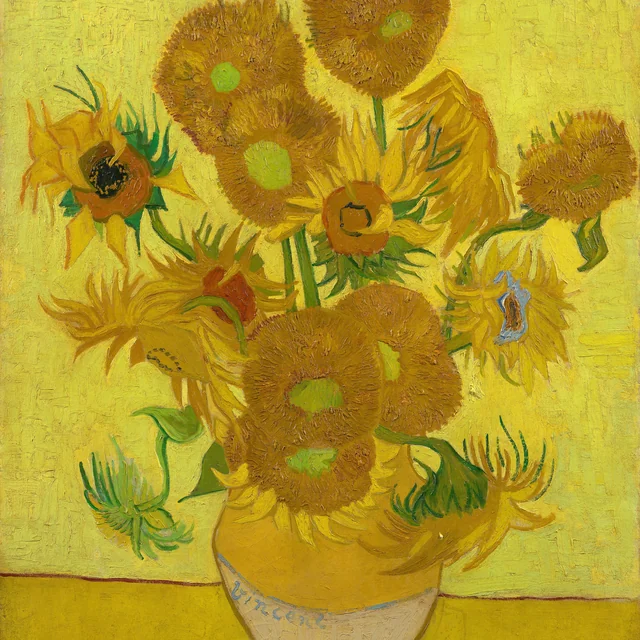
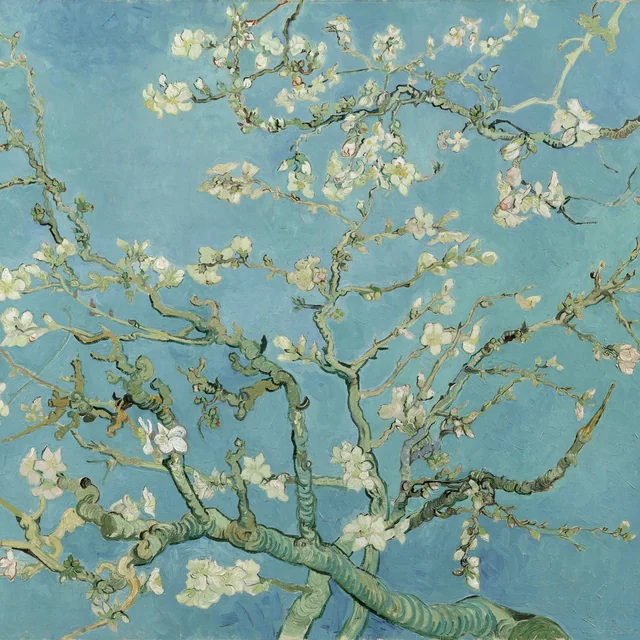
Pro Tip: If your travel dates are flexible, book the Friday evening slot (open until 21:00). Enjoying Sunflowers and Almond Blossom bathed in soft gallery illumination without mid-day crowds is an extraordinary experience.
Architectural Masterpiece: Two Iconic Buildings
The museum complex is an architectural triumph composed of two distinct structures connected beneath Museumplein by a luminous subterranean glass atrium:
- The Rietveld Building (1973): Designed by celebrated Dutch modernist architect Gerrit Rietveld, this clean, four-story building features a central skylit atrium where Vincent’s permanent collection is presented in rigorous chronological sequence.
- The Kurokawa Wing & Glass Entrance (2015): Designed by Japanese master Kisho Kurokawa, this elliptical titanium and glass wing hosts world-class temporary exhibitions. The state-of-the-art glass entrance pavilion welcomes visitors from Museumplein down a grand glass staircase into a bright, open foyer.
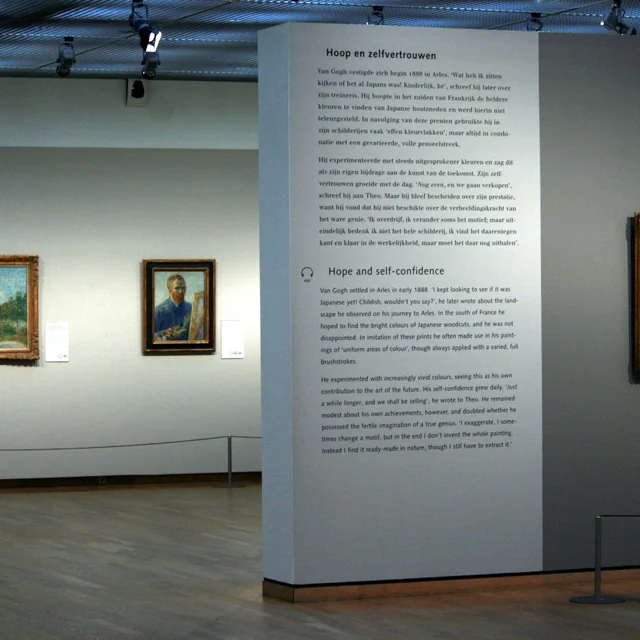
The Permanent Collection: A Chronological Odyssey
The permanent collection on Floors 0 through 3 of the Rietveld building unfolds as a five-chapter biography, charting Vincent’s evolution from a struggling self-taught realist to the father of modern expressionism.
Early Years in the Netherlands (1881–1885)
Vincent began painting at the relatively late age of 27. His early Dutch period is characterized by sombre, earthy palettes depicting farm labourers and weavers in Nuenen.
- Key Masterpiece: The Potato Eaters (1885) — a raw, deeply empathetic depiction of peasant life under oil lamps that Vincent considered his first true masterpiece.
Paris: The Color Awakening (1886–1888)
Moving to Paris to join his art dealer brother Theo, Vincent encountered the French Impressionists (Monet, Degas, Pissarro) and Pointillism. His palette exploded with radiant light and pure pigment.
- Key Masterpieces: Self-Portrait with Grey Felt Hat (1887) and his colorful still lifes and explorations of Japanese woodblock prints (Japonaiserie).
Arles: The Golden Southern Light (1888–1889)
Seeking the warmth and brilliant sun of the French Midi, Vincent relocated to Arles in Provence, moving into the famous “Yellow House.” This period produced the most celebrated canvases in art history.
- Key Masterpieces: Sunflowers (January 1889), The Yellow House (1888), and The Bedroom (1888) with its serene blue walls and vibrant furnishings.
Saint-Rémy: Passion & Emotional Intensity (1889–1890)
Following a severe mental breakdown, Vincent voluntarily checked himself into the Saint-Paul-de-Mausole asylum in Saint-Rémy. Despite his suffering, his artistic output was astonishingly potent, marked by swirling brushwork and emotive contours.
- Key Masterpieces: Irises (1889), Wheatfield with a Reaper (1889), and Almond Blossom (February 1890) — painted as a tender celebratory gift for his newborn nephew and namesake Vincent Willem.
Auvers-sur-Oise: The Final Days (May–July 1890)
Under the watchful care of Dr. Paul Gachet, Vincent spent his final 70 days in the countryside north of Paris, feverishly painting nearly one canvas per day before his tragic death on July 29, 1890.
- Key Masterpieces: Wheatfield with Crows (July 1890), with its dramatic turbulent sky, and Tree Roots (1890) — recognized as his final unfinished work.
Practical Visitor Tips for an Ideal Experience
- Arrive Exactly at Your Time Slot: Arrive 10 to 15 minutes before the time printed on your ticket to clear security smoothly. Late arrivals risk denied entry during peak periods.
- Grab the Multimedia Audio Guide: Available in Dutch, English, French, German, Italian, Spanish, Mandarin, Japanese, Korean, Portuguese, and Russian. It enriches the tour with Vincent’s personal letters and correspondence.
- Follow the Floor Order: Begin on Floor 0 (Self-Portraits & timeline), take the stairs to Floor 1 (Early Dutch & Paris), Floor 2 (Letters, drawings & intimate works), and finish on Floor 3 (Southern France & final days).
- Photography Rules: Photography without flash or tripods is permitted in the gallery spaces for personal use, except where signage indicates private collections.
- Luggage Policy: Only small day backpacks and handbags are allowed. Large suitcases and oversized backpacks cannot be stored at the cloakroom.
Getting to the Van Gogh Museum
The museum is prominently situated on Museumplein in Amsterdam-Zuid:
- By Tram:
- Trams 2 and 12 from Amsterdam Centraal Station stop directly at Van Baerlestraat (1 min walk).
- Tram 5 from Centraal or Station Zuid stops at Van Baerlestraat or Museumplein.
- By Metro: Take Metro 52 (North-South Line) to station Vijzelgracht, followed by a scenic 7-minute walk across the canal ring.
- By Bicycle: Guarded underground bicycle parking is available directly beneath Museumplein.
- By Car: Underground paid parking is conveniently located beneath the park at Q-Park Museumplein (entrance at Van Baerlestraat 33b).
What to Combine on Museumplein
Make the most of your cultural day in Amsterdam:
- Rijksmuseum: Dutch Golden Age masterpieces, Rembrandt’s Night Watch, and Vermeer’s Milkmaid (3 min walk across the lawn).
- Stedelijk Museum: Modern and contemporary art, design, and Bauhaus masters (1 min walk).
- Moco Museum: Contemporary, street art, Banksy, and immersive digital installations (2 min walk).
- Royal Concertgebouw: World-class classical music acoustics directly across the square (3 min walk).
- Vondelpark: Amsterdam’s most celebrated historic green park, perfect for a relaxing stroll or terrace coffee (5 min walk).
Book Your Van Gogh Museum Tickets Now
Vincent van Gogh’s art continues to captivate millions across generations. Experiencing the vibrant yellow impasto of Sunflowers and the gentle turquoise serenity of Almond Blossom in person is a bucket-list cultural memory.
Tickets are strictly limited by timed slots. Scroll up to our booking widget, choose your preferred date, and guarantee your skip-the-line entry today!